Why Grid Paper Small Large Grid Paper Is Reshaping How Professionals Plan, Sketch, and Scale Ideas
In an era where digital tools dominate creative workflows, a quiet resurgence is underway—not of analog nostalgia, but of intentional analog-digital hybridization. At the center of this shift is Grid Paper Small Large Grid Paper: a meticulously designed, multi-format resource that bridges precision sketching with scalable execution. More than just printable templates, it’s a workflow catalyst—engineered for professionals who demand structure without rigidity, flexibility without fragmentation.
What Grid Paper Small Large Grid Paper Really Is (Beyond the Name)
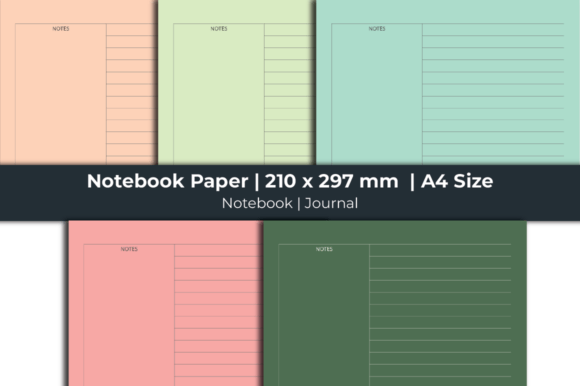
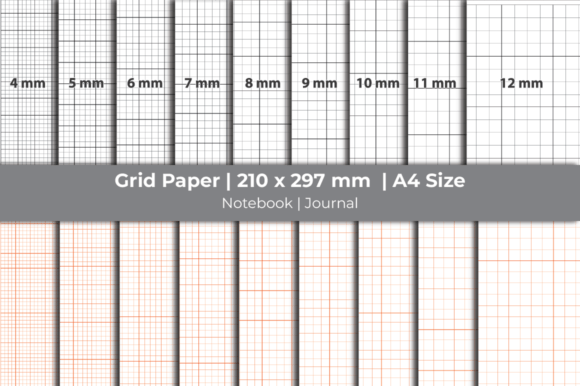
Grid Paper Small Large Grid Paper isn’t a single sheet or a one-size-fits-all template. It’s a purpose-built system—a curated collection of 18 distinct lined and grid-based layouts, all unified by consistent A4 sizing (210 × 297 mm) and intelligently varied grid densities. The “Small Large” designation reflects its dual-scale logic: fine-grained grids (e.g., 2 mm or 3 mm spacing) support detailed technical drawing, wireframing, or calligraphy practice; larger grids (5 mm, 10 mm, or even quarter-inch variants) accommodate rapid ideation, layout blocking, or visual note-taking during strategy sessions.
Crucially, it ships as a complete production-ready package: one ZIP file containing JPG, PNG, SVG, PDF, and editable source files. This isn’t clipart—it’s design infrastructure. SVG enables crisp scaling for web dashboards or UI mockups; PDF preserves print fidelity for client-facing deliverables; PNG/JPG allow quick insertion into presentations or Notion docs; and source files (often in industry-standard formats like .AI or .EPS) empower customization for brand-aligned workflows.
The Rise of the “Print-Ready Digital Asset”
This product sits at the intersection of two powerful trends: the normalization of digital-first creation and the growing demand for physical-adjacent utility. Consider how professionals now operate:
- Freelancers pitch visual concepts via Figma but hand-sketch user flows before coding—then print those sketches for client workshops.
- Product managers map sprint roadmaps in Miro, yet annotate timelines on printed grid paper to avoid screen fatigue and spark nonlinear thinking.
- Marketers build campaign calendars in Airtable but use large-grid paper to storyboard social content sequences—aligning tone, timing, and visual rhythm across platforms.
- Engineers and architects run simulations in CAD but rely on printed small-grid sheets for field annotations, calibration checks, or teaching foundational spatial reasoning.
Grid Paper Small Large Grid Paper answers a subtle but critical need: reproducible fidelity across contexts. Unlike free online templates—often inconsistent in DPI, misaligned margins, or locked into non-editable formats—this set guarantees pixel-perfect output whether viewed on a Retina display, projected in a conference room, or printed on recycled stock. That reliability reduces friction in cross-functional handoffs, especially where clarity impacts timelines, budgets, or compliance (e.g., architectural sign-offs or UX audit documentation).
Workflow Efficiency Meets Cognitive Design
Research in cognitive psychology underscores why grid structure matters—not as constraint, but as cognitive scaffolding. Studies show that structured visual fields improve working memory retention by up to 27% during complex problem-solving tasks (source: Journal of Experimental Psychology, 2022). Grids reduce “visual search time,” letting the brain focus on meaning rather than spatial orientation. When a marketer sketches a content calendar on a 5-mm grid, they’re not just drawing boxes—they’re leveraging spatial memory cues to recall campaign phases, channel priorities, and KPI alignment without flipping between tabs.
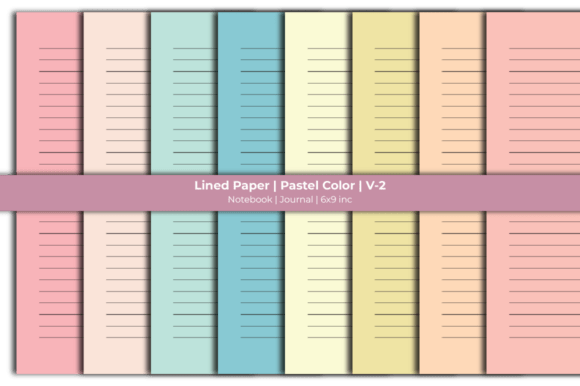
Grid Paper Small Large Grid Paper enhances this effect through intentional variation. The inclusion of 18 lined paper options—not just blank grids—acknowledges hybrid workflows: bullet journaling alongside wireframes, meeting notes beside flow diagrams, or handwritten annotations layered atop printed analytics reports. Lined variants maintain vertical rhythm for text-heavy planning (e.g., editorial calendars or SOP drafting), while grid variants anchor spatial logic (e.g., responsive breakpoints or modular design systems).
Scalability Without Sacrifice: Why Format Diversity Matters
The delivery format—instant download, no physical item—isn’t just convenience. It’s strategic scalability. In distributed teams, version control matters. With editable source files, a design lead can adjust grid spacing to match a new brand system’s spacing scale (e.g., shifting from 8px to 12px baseline), then re-export all assets for team-wide use—no vendor dependency, no licensing delays.
SVG support unlocks another dimension: embedding dynamic grids directly into dashboards or internal tools. Imagine a project management interface where sprint planning views render live SVG grids—clickable, resizable, and synced to Jira status fields. Or a developer documentation site where code architecture diagrams are overlaid on scalable grid backgrounds for consistent visual hierarchy. Grid Paper Small Large Grid Paper provides the foundational assets to build such integrations—not as static images, but as interoperable components.
Meeting Evolving Expectations in Hybrid Work
Post-pandemic work models have cemented hybridity—not just in location, but in modality. Professionals toggle constantly between screens and surfaces: reviewing a PDF proposal on iPad, sketching refinements on a connected notebook, then printing a clean version for stakeholder review. Grid Paper Small Large Grid Paper anticipates this fluidity. Its A4 standardization ensures compatibility with global printers, multifunction devices, and even compact thermal printers used in field operations. Its resolution-agnostic formats prevent “pixelation panic” when zooming into a client presentation slide—or “bleed anxiety” when trimming a printed prototype.
Moreover, its instant-download model aligns with modern procurement expectations. Freelancers billing by the hour can’t wait for shipping; startups iterating rapidly need assets yesterday; educators preparing remote learning kits require immediate access. There’s no inventory risk, no customs delay, no carbon footprint from physical fulfillment—just secure, encrypted delivery post-payment. That operational efficiency compounds across thousands of users, making it both ethically sound and economically intelligent.
Practical Integration: Real-World Use Cases
Consider these implementations—each grounded in current professional practice:
- UX Research Synthesis: Researchers print small-grid sheets to map affinity clusters from interview transcripts—using color-coded sticky notes aligned to grid intersections. Later, they scan annotated sheets and vectorize them in Illustrator using the included SVG base for final report visuals.
- Educational Content Creation: Instructional designers use large-grid paper to block lesson pacing—each row representing a 10-minute segment, columns mapping to learning objective, activity type, and tech tool. They photograph the layout, drop it into Canva, and overlay interactive elements—leveraging the high-res JPG/PNG for crisp digital reuse.
- Startup Pitch Development: Founders sketch investor narrative arcs on 10-mm grid paper—mapping problem, solution, traction, and ask across quadrants. They photograph the sketch, import the PNG into Pitch.com, and animate transitions between sections—keeping the raw, human-centered energy of the original while achieving polished delivery.
Looking Ahead: Infrastructure, Not Just Templates
Grid Paper Small Large Grid Paper signals a broader evolution: the move from disposable templates to design infrastructure. As AI accelerates content generation, human judgment becomes more valuable—and more reliant on clear frameworks. Grids provide that framework. They don’t replace creativity; they focus it. They don’t eliminate tools; they unify them.
For professionals navigating complexity—whether launching a SaaS product, redesigning a healthcare workflow, or building a community-driven brand—this isn’t about paper. It’s about precision with portability, structure with sovereignty, and clarity with continuity. Grid Paper Small Large Grid Paper delivers exactly that: a silent, scalable partner in every stage of the thinking-to-doing pipeline.
When your next idea needs grounding—not just capturing—start with the grid. Then build outward, confidently, consistently, and completely.