Journal Notebook Paper for Real-World Use
Whether you’re drafting a client proposal at 7 a.m., sketching lesson plans between classes, or refining a blog post during a quiet Sunday morning—having the right Journal Notebook Paper makes a tangible difference. It’s not about aesthetics alone; it’s about consistency, compatibility, and control over how your ideas take shape on the page.
What You’re Actually Getting—and Why Format Matters
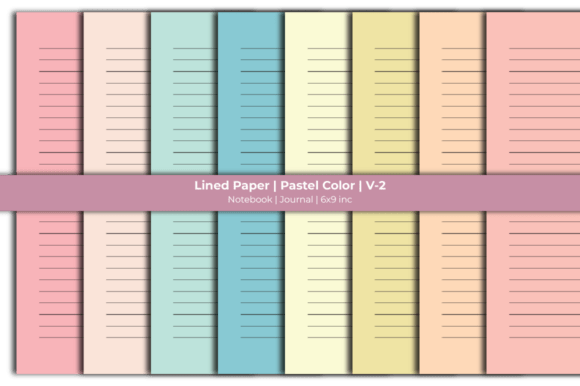
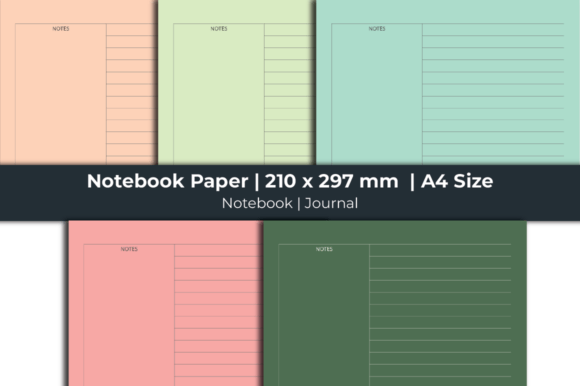
This Journal Notebook Paper package delivers five distinct lined paper designs in A4 size (210 × 297 mm)—a standard that fits most binders, planners, and home printers without cropping or scaling. Each design is included in four accessible formats: JPG (for quick previews or digital annotation), PNG (with transparent background for layering in design tools), PDF (print-ready with precise margins and bleed-safe layout), and editable source files (typically layered PSD or AI, depending on the creator’s workflow).
That multi-format access isn’t just convenience—it’s flexibility built into the foundation. A freelance educator can drop the PNG into a Canva lesson slide; a small business owner can print the PDF double-sided for clean meeting handouts; a journaling app developer might extract line spacing data from the source file to match digital typography. The value lives in how easily these files integrate into *your* existing tools—not a new system you have to learn.
Clarity Starts With Consistent Line Spacing
The five lined variants aren’t arbitrary. They offer intentional variations in line height (6 mm, 7 mm, 8 mm), margin width (narrow, standard, wide), and subtle stylistic cues—like faint gray lines versus crisp black, or top-margin headers for dated entries. These details affect legibility, writing speed, and even posture: wider spacing reduces crowding for those with larger handwriting or motor considerations; narrower lines support dense note-taking for researchers or developers capturing code comments alongside thoughts.
One designer we spoke with uses the 7 mm version exclusively for client feedback sessions—enough space to write clearly, but tight enough to discourage rambling. Another educator prints the wide-margin variant for student reflection sheets, leaving room for annotations without requiring a second sheet. That level of intentionality is rare in generic templates—and it shows up in how efficiently people use them.
No Physical Item Means No Waiting—But Also No Guesswork
This is an instant digital download. No shipping delays, no inventory limits, no customs fees. Once payment clears, you get immediate access to the ZIP file—no login walls, no email verification loops. That immediacy matters when momentum is fragile: the writer who just finished a workshop and wants to capture insights *now*, the entrepreneur finalizing a pitch deck before tomorrow’s investor call, the teacher preparing Monday’s materials over the weekend.
But “instant” doesn’t mean “incomplete.” Because all formats are included—from screen-friendly PNGs to production-grade PDFs—you avoid the common pitfall of buying a “printable” only to discover the lines blur when scaled, or the margins shift unexpectedly on your printer. The A4 sizing also eliminates guesswork for international users: unlike letter-size templates that require manual adjustment outside North America, this works as intended across Europe, Australia, India, and most of Asia.
Who Benefits Most—and Where It Fits (and Doesn’t)
Professionals who regularly translate thought into action—especially those juggling multiple output channels—gain the most. Think of a marketing consultant who writes strategy notes by hand, then scans and annotates them digitally before turning them into a client-facing slide deck. Having matching line spacing across notebook, scan, and presentation keeps visual rhythm intact—reducing cognitive load when reviewing or sharing.
Freelancers and solopreneurs benefit from the time saved avoiding formatting friction. Instead of tweaking line height in Word or wrestling with margin settings in InDesign, they open the PDF and print. One copywriter told us she uses the source file to add her logo to the top margin—creating branded internal briefs in under two minutes.
Educators appreciate the wide-margin version for student handouts where handwritten responses need clear separation from instructions. And journalers who prefer analog capture but want to digitize select pages later find the high-res PNG and clean PDF invaluable for OCR accuracy and archival clarity.
That said, this isn’t a replacement for specialized tools like bullet journal kits with icons and trackers, nor does it include decorative elements like watermarks or floral borders. If your goal is highly visual planning—or if you rely on dot-grid or graph paper for sketching or technical diagrams—this Journal Notebook Paper set serves a different purpose: clean, functional, repeatable structure for linear thinking and written communication.
How to Make It Work for Your Workflow
Start by printing one page of each variant on plain paper. Write a short paragraph using your usual pen or pencil. Pay attention to: how your hand moves across the page, whether lines feel too close or too far apart, and if the top margin gives you enough breathing room before text begins. That 30-second test reveals more than any spec sheet.
Then consider your most frequent use case. If you often scan handwritten notes into Evernote or Notion, prioritize the PNG version—it preserves sharp edges better than JPG for OCR. If you’re printing dozens of copies for a workshop, the PDF ensures consistent registration across printers. And if you tweak layouts regularly (e.g., adding headers, changing fonts, adjusting spacing), keep the source file handy—but don’t feel pressured to edit unless it meaningfully improves your output.
Finally, store the ZIP file in a dedicated folder labeled “Templates > Paper,” not buried in Downloads. Name the extracted files clearly: “Journal_Notebook_A4_7mm_Lined_PDF.pdf”. Small habits like this compound—turning a one-time purchase into a long-term asset you reach for without hesitation.
Real Value Lies in Repetition—Not Novelty
In a world saturated with flashy digital tools, there’s quiet power in returning to reliable, well-considered paper structure. This Journal Notebook Paper doesn’t promise transformation. It offers something more sustainable: reduction of micro-frictions that accumulate over hundreds of pages and dozens of projects.
It’s the difference between spending three minutes adjusting margins before printing a meeting agenda—or clicking “print” and walking away. Between squinting at a blurry scanned page—or having crisp, readable text ready for markup. Between hunting for a template that “feels right”—and opening a file you already trust.
That reliability compounds. Over time, it frees mental bandwidth for what matters: the idea, the question, the connection—not the container.