✨ My First Affirmation Journal
If you're supporting a child’s emotional growth—or creating resources for kids—you’ve likely seen the surge in affirmation-based tools. But not all journals deliver what they promise. ✨ My First Affirmation Journal stands out because it’s built *with* developmental nuance, not just pastel colors and smiley faces. It’s a guided journey to positivity and self-love for kids—designed for real use, not shelf decor. And yet, many well-intentioned adults miss key details when choosing, customizing, or implementing it—leading to frustration, wasted time, or shallow engagement.
Why This Journal Resonates (and Why “Just Printing It” Isn’t Enough)
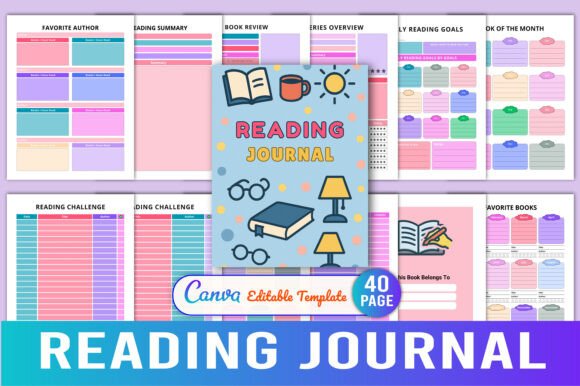
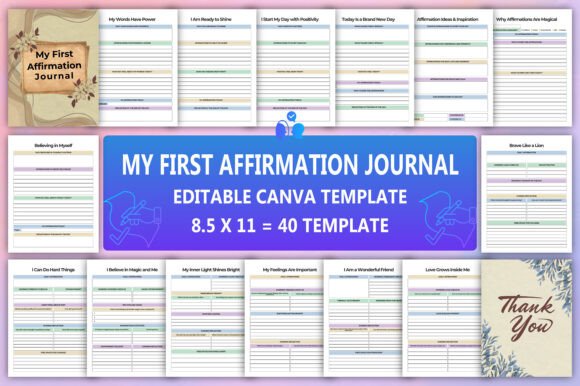
This isn’t a fill-in-the-blank worksheet disguised as a journal. With 40 thoughtfully sequenced pages, ✨ My First Affirmation Journal weaves daily affirmation prompts (“I am kind,” “I am safe,” “I am learning”) into morning and evening reflections, creative free-write spaces, and playful courage challenges. The layout supports attention spans: large fonts, breathing-room margins, whimsical but uncluttered illustrations, and intentional white space—not busy graphics that distract from meaning.
What makes it especially valuable for educators, therapists, homeschoolers, and parents is its balance of structure and flexibility. The editable Canva link lets you adapt language for neurodiverse learners, add IEP-aligned goals, or translate core prompts—but only if you know how to use that flexibility wisely.
Mistake #1: Assuming “Kid-Friendly” Means “No Setup Required”
Some buyers download the PDF, print it, hand it to a child, and expect immediate engagement. But young children often need scaffolding: a brief explanation of what affirmations are, modeling how to say one aloud, or co-filling the first few pages. Without that, the journal becomes another stack of paper gathering dust.
Better approach: Spend five minutes before day one reading the “About This Journal” page together. Try saying an affirmation in front of a mirror. Draw a quick heart beside one that feels true. That small ritual builds familiarity—and makes the journal feel like an invitation, not an assignment.
Mistake #2: Over-Customizing Before Testing the Original Flow
The editable Canva file is powerful—but jumping straight into redesigning fonts, swapping illustrations, or rewriting prompts before using the original version can backfire. You might unintentionally disrupt the emotional pacing: for example, moving gratitude prompts too close to big-feeling reflection questions can overwhelm a sensitive child.
Better approach: Print and use the journal as-is for at least one full week. Note where your child pauses, skips, or asks questions. Then, customize *only* what didn’t land—like simplifying a sentence, adding a visual cue for a nonverbal learner, or inserting a favorite animal into a prompt (“I am as brave as a lion”). Let real usage—not assumptions—guide your edits.
Mistake #3: Ignoring File Type Strengths (and Limits)
Many users assume the JPG files are ideal for digital classrooms—yet JPGs don’t scale cleanly on tablets or interactive whiteboards. Others try printing the Canva link directly, not realizing that Canva exports at screen resolution unless you manually select “PDF Print” with CMYK and bleed settings enabled. The result? Faded colors, blurry text, or cut-off corners.
Better approach: Use the high-quality PDF for printing—it’s pre-optimized for crisp text and vibrant color reproduction. Reserve JPGs for social media previews or simple slide decks. And if you’re editing in Canva, always export final versions as PDF (not PNG or JPG) and double-check the “print-ready” toggle before downloading.
Mistake #4: Treating It as a Standalone Tool—Not Part of a Bigger Practice
Affirmations work best when woven into consistent routines—not isolated to journal time. Skipping connection to real-world moments (“Remember when you shared your snack? That was kindness—just like today’s affirmation!”) limits emotional anchoring.
Better approach: Pair each week’s theme—confidence, gratitude, kindness—with one tangible action: a “kindness jar” at home, a “brave choice” chart on the fridge, or a family gratitude pause before dinner. The journal becomes the reflective anchor; those actions make the learning stick.
What to Check Before You Download, Buy, or Assign
- Age alignment: Designed for ages 5–10, but check your child’s literacy level and emotional vocabulary. A 6-year-old who reads fluently may still need help decoding “resilience”—so preview prompts and simplify terms where needed.
- Print readiness: If ordering professionally, confirm your printer accepts PDF/X-1a or PDF/X-4 standards—and that the included PDF meets them. Most do, but third-party converters sometimes strip embedded fonts.
- Digital access: The Canva link grants editing rights—but only for the lifetime of the shared link. Don’t rely on it for long-term curriculum storage. Download your final edited PDFs and save backups locally or in cloud storage with version labels (e.g., “MyFirstAffirmation_Journal_v2_KindnessUnit”).
- Theme progression: Flip through all 40 pages before starting. Notice how confidence builds before deeper self-reflection, how gratitude appears early and returns later with more nuance. That sequencing matters—it’s pedagogically intentional, not decorative.
A Final Thought: Affirmations Are Not Magic—They’re Mirrors
✨ My First Affirmation Journal doesn’t manufacture confidence or erase hard feelings. Instead, it offers gentle, repeated opportunities for children to notice their own strength, name their emotions, and reconnect with safety—even on messy days. When used with presence—not perfection—it becomes part of something bigger: a daily practice of seeing oneself clearly, kindly, and consistently.
So before you click “download,” ask yourself: Will I use this alongside listening, naming, and showing up—not just assigning? That’s where the real transformation begins.