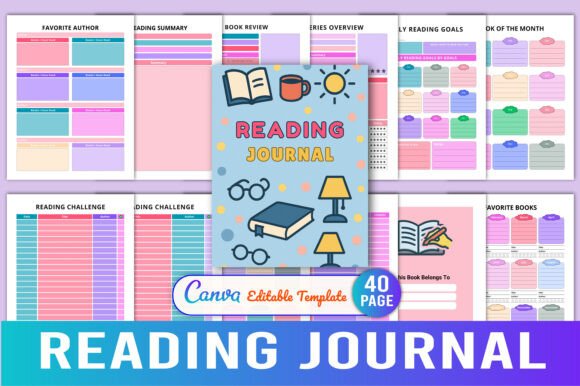
📖 Reading Journal: Your Thoughtful Companion for a More Intentional Reading Life
Reading is more than turning pages—it’s reflection, connection, and growth. Yet without structure, even the most passionate readers often lose track of what they’ve read, why it mattered, or where to go next. That’s where the 📖 Reading Journal steps in—not as a rigid planner, but as a flexible, compassionate tool designed to deepen engagement with books while honoring how real people actually read.
Why a Reading Journal Makes Sense—Even If You’ve Tried (and Stopped) Before
Many readers start tracking with apps or spreadsheets, only to abandon them within weeks. Why? Because digital tools often prioritize data over delight—and don’t accommodate life’s unpredictability. The 📖 Reading Journal bridges that gap. It’s built around human habits: the impulse to underline a line, the joy of picking a “Book of the Month,” the quiet relief of logging a Did-Not-Finish without guilt. It doesn’t ask you to be perfect—it asks you to be present.
A Tool Designed for Real Reading Rhythms
Unlike generic notebooks, the 📖 Reading Journal anticipates how reading fits into busy lives. Its sections mirror natural reader behaviors:
- 📅 Reading Log: Capture title, author, dates, page count, and a quick personal note—not just “finished,” but “felt like walking through fog and sunlight at once.”
- 📝 Book Reviews: Go beyond star ratings. Reflect on emotional resonance, pacing shifts, character arcs, or how a book changed your thinking—even if only for an afternoon.
- 🧹 Abandoned Did-Not-Finish Tracker: Normalize stepping away. Note why—a mismatched tone, poor translation, timing issues—and preserve clarity about your own boundaries as a reader.
This isn’t about accountability to others. It’s about cultivating self-awareness: *What kinds of stories energize me? When do I reach for comfort reads versus challenge reads? What themes keep reappearing across my shelves?*
Who Benefits Most From the 📖 Reading Journal?
The 📖 Reading Journal serves a surprisingly wide range of users—each finding distinct value:
- Professionals and creators: Use the 💬 Quote Collection and 📝 Book Reviews to gather inspiration for writing, speaking, or design work. A well-annotated journal becomes a living idea bank.
- Teachers and librarians: Leverage the 📚 Library Series Tracker and 🏆 Yearly Reading Tracker Goals to model thoughtful reading habits for students—or curate themed displays based on personal insights.
- Book club facilitators: The 📜 Monthly Book of the Month section helps surface standout titles worth discussing—and the 🎯 Reading Challenges offer gentle, shared goals (e.g., “5 translated works this year”).
- Parents and caregivers: Track shared reading, note children’s reactions, and use the 🛒 Book Wishlist to plan thoughtful gifts aligned with evolving interests.
- Neurodivergent readers: Visual progress markers (like the 📈 Yearly Statistics summary) support executive function, while low-pressure prompts reduce the anxiety sometimes tied to “should-read” pressure.
More Than Tracking—It’s a Mirror for Your Mind
One of the 📖 Reading Journal’s quiet strengths lies in its capacity for pattern recognition. Over time, the 📈 Yearly Statistics section reveals subtle truths: maybe 70% of your reads are by women authors—or you consistently choose historical fiction in winter and speculative fiction in summer. These aren’t trivial details. They’re clues about identity, curiosity, and emotional needs.
Similarly, the 🧡 Favorite Books & Authors Section does more than list names. It invites curation—*why* these? What threads connect them? That kind of reflection strengthens memory, deepens appreciation, and often sparks new reading pathways you wouldn’t have discovered otherwise.
Practical Strengths—and Honest Considerations
The 📖 Reading Journal shines where flexibility meets intention:
- ✅ No tech dependency: Works offline, requires no updates or logins—ideal for travel, retreats, or screen-free zones.
- ✅ Adaptable pace: Skip sections, revisit old logs, scribble in margins. There’s no “wrong way” to fill it.
- ✅ Physical engagement: Handwriting boosts retention and slows consumption—encouraging deeper processing than tapping on a phone.
That said, it’s worth acknowledging realistic expectations:
- ⚠️ Not a replacement for library apps: It won’t scan ISBNs or auto-populate synopses. It complements—not competes with—digital tools.
- ⚠️ Requires light consistency: Like any habit, benefits compound over time. Even five minutes a week yields meaningful insight—but skipping months means losing continuity.
- ⚠️ Not prescriptive: It won’t tell you *what* to read. Instead, it helps you discover *why* certain books land—and what that says about you.
Real-World Uses: Beyond the Obvious
Consider how the 📖 Reading Journal operates in everyday contexts:
- During a career transition: Use the 🎯 Reading Challenges to explore adjacent fields—e.g., “12 books on communication, ethics, and systems thinking”—then reflect on overlaps with your values and skills.
- After burnout: The 🧹 Abandoned Tracker and 📜 Monthly Book of the Month help rebuild reading as joyful, not obligatory—reclaiming agency one gentle entry at a time.
- In creative blocks: Flip to past 💬 Quote Collections or 📝 Book Reviews to reignite language, rhythm, or thematic questions that once sparked ideas.
- As a legacy practice: The physical journal becomes a tactile record—not just of books, but of who you were each year: the parent reading aloud at bedtime, the student wrestling with theory, the retiree rediscovering poetry.
Evaluating Fit: Is This Right for You?
Ask yourself:
- Do you ever finish a book and think, *“I loved that—but I can’t quite say why”*?
- Have you lost track of books you meant to revisit—or forgotten why you loved one years ago?
- Do you want to understand your reading habits without analytics dashboards or social comparison?
- Would you appreciate a space where “abandoning” a book feels like wisdom—not failure?
If one or more resonate, the 📖 Reading Journal likely aligns with your goals. It’s especially powerful if you value reflection over reporting, meaning over metrics, and sustainability over speed.
A Final Thought: Reading Well, Not Just Widely
In a world pushing for faster consumption and bigger lists, the 📖 Reading Journal quietly champions something different: reading with attention, honesty, and care. It doesn’t measure success in numbers alone—it honors the pause before a favorite passage, the margin note that captures a sudden insight, the satisfaction of closing a chapter and opening your journal instead of your phone.
Whether you’re rereading Pride and Prejudice for the seventh time or diving into your first graphic novel, the 📖 Reading Journal meets you there—not to judge your pace or taste, but to hold space for what reading truly offers: a richer relationship with ideas, language, and yourself.