Luxury Dark Background Design Vector
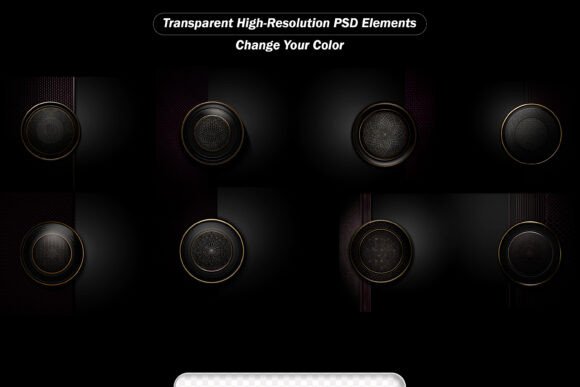
A Luxury Dark Background Design Vector isn’t just another dark-themed asset—it’s a precision-crafted visual foundation built for depth, contrast, and atmospheric control. Unlike generic black or gradient backgrounds, this vector-based design integrates subtle texture, controlled light interaction points, and scalable geometry that responds predictably to overlays, lighting effects, and compositing workflows. Its defining trait is intentional restraint: it avoids flatness without overwhelming the foreground, making it especially effective when paired with high-impact light elements like lens flares, glowing rays, or radiant sparkles.
What Sets This Collection Apart from Standard Light Effect Packs
Many light effect resources focus solely on the glow—fire bursts, bokeh, or stars—but treat the background as an afterthought. The Luxury Dark Background Design Vector flips that priority. It begins with a rich, layered dark base (often incorporating micro-textures, soft gradients, or faint geometric underlays) that provides context and dimension for light to interact with. When you layer a lens flare over a flat black JPEG, it floats. Over this vector background, it feels anchored—like light catching dust in a real space.
This distinction matters most in professional editing and design contexts where realism and intentionality drive perception. For example, a product shot placed over a standard black background may look clean but sterile; the same image over a Luxury Dark Background Design Vector gains spatial cues—subtle shadows, tonal variation, and edge definition—that support credibility and visual hierarchy.
How It Compares Across Common Use Cases
The value of the Luxury Dark Background Design Vector becomes clearer when evaluated against alternatives commonly used in similar workflows:
- Plain black or grayscale JPEGs: Offer simplicity and universal compatibility but lack scalability, editable structure, or depth cues. They’re efficient for quick mockups but limit refinement—especially when adjusting contrast, blending modes, or masking.
- Photographic dark backdrops (e.g., studio shots of velvet or matte surfaces): Provide organic texture and realism but introduce noise, inconsistent lighting, and fixed resolution. Resizing often reveals pixelation or compression artifacts, and removing unwanted highlights requires time-consuming retouching.
- Procedural or generative dark backgrounds (from tools like Substance Designer or AI upscalers): Can scale infinitely and adapt to parameters, but frequently lack the curated balance of tone, grain, and negative space found in professionally designed vectors. Their “neutral” appearance sometimes reads as clinical rather than luxurious.
- Free vector dark templates (from marketplaces or open repositories): Vary widely in construction quality—some use rasterized elements disguised as vectors, others rely on overly complex paths that hinder editing. The Luxury Dark Background Design Vector stands out for its clean path structure, consistent color mode (CMYK/RGB ready), and deliberate attention to transparency handling.
Strengths That Support Real-World Workflows
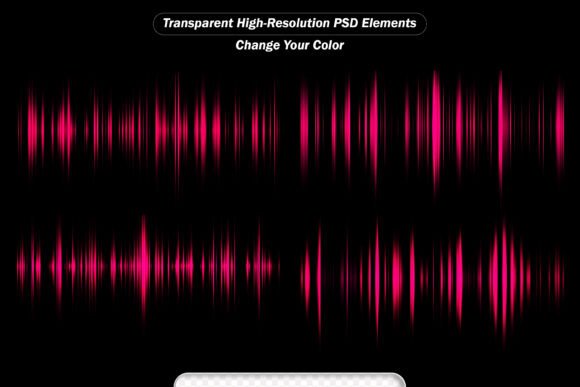
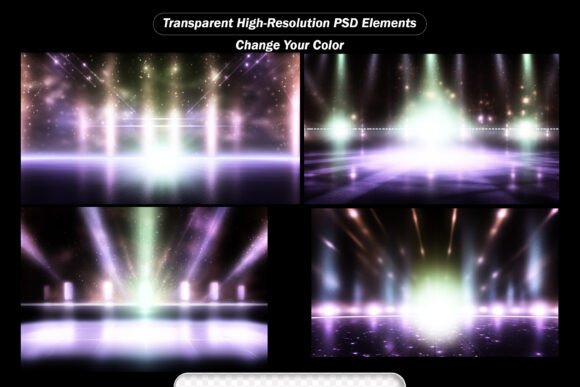
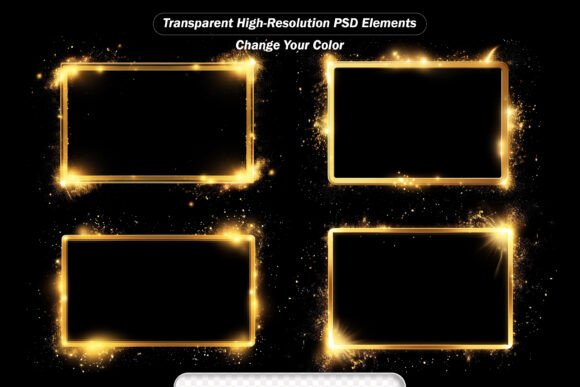
The included light effects—lens flares, fire bursts, glowing rays, twinkling stars, soft bokeh, and radiant sparkles—are not decorative add-ons. They’re engineered to complement the background’s tonal range and transparency profile. Each effect ships with full alpha channel integrity, meaning they integrate cleanly without fringing, halos, or manual cleanup—even at extreme zoom levels.
Practically, this means:
- A photographer enhancing a night portrait can place a soft bokeh overlay directly over the Luxury Dark Background Design Vector, adjust blend mode to Screen, and instantly achieve natural-looking ambient light diffusion—no masking required.
- A branding designer building a luxury watch campaign can combine a subtle glowing ray with the vector background, then apply a duotone gradient to unify the composition—all within one PSD file, with non-destructive layer organization.
- A digital artist creating a sci-fi scene can stack multiple star layers at varying opacities and sizes, confident that each retains crisp edges because the background doesn’t compress or degrade detail during export.
Tradeoffs and Practical Limitations
No resource excels in every scenario—and understanding where the Luxury Dark Background Design Vector fits—and where it doesn’t—is essential for informed decisions.
It’s optimized for projects where mood, contrast, and refined lighting are central. That makes it less ideal for:
- High-speed social media content creation where speed outweighs nuance—plain black backgrounds or auto-generated overlays may be faster for batch edits.
- Print-heavy workflows requiring Pantone-specific spot color builds, since the collection focuses on RGB/CMYK flexibility rather than pre-mapped brand colors.
- Interactive or web-based animations, as vector backgrounds alone don’t include motion data—though they serve well as static frames in After Effects or Figma prototypes when exported correctly.
Also, while the 3000×2000 pixel JPEGs offer strong resolution for most print and screen outputs, users working with ultra-high-res formats (e.g., large-format billboards or 8K video stills) may need to supplement with additional sharpening or vector scaling techniques—not a flaw, but a realistic boundary tied to standard industry delivery specs.
When It’s the Right Choice—and When to Look Elsewhere
The Luxury Dark Background Design Vector shines in situations where visual authority and tonal cohesion matter more than raw speed or format versatility. It’s well-suited for:
- Editorial layouts needing cinematic consistency across spreads
- Brand identity systems built around nighttime, premium, or futuristic aesthetics
- Digital artwork where light behavior must feel physically plausible—not just visually striking
- Photo editing portfolios where clients expect polished, gallery-ready output
Conversely, if your workflow centers on rapid iteration across dozens of variants—or relies heavily on dynamic color shifts, responsive layout constraints, or 3D integration—the value proposition shifts. In those cases, modular tools (like parametric brushes in Procreate or real-time lighting controls in DaVinci Resolve) may offer more adaptability, even if they demand steeper learning curves.
Integration Clarity: Why File Types Matter
The inclusion of both a fully layered PSD and a high-resolution JPEG isn’t redundant—it reflects thoughtful format strategy. The PSD preserves editable layer masks, blending options, and smart object scalability, letting designers tweak intensity, position, and interaction without flattening. The JPEG serves as a reliable fallback for users outside Adobe ecosystems (e.g., Affinity Photo, GIMP, or CMS platforms that accept only flattened assets).
This dual-format approach supports broader team collaboration: a retoucher works in PSD for precision; a marketing colleague drops the JPEG into a presentation slide without worrying about missing fonts or unsupported layers. That kind of interoperability is rarely emphasized in lighter-weight effect packs—and it reduces friction across skill levels and software preferences.
Making the Call: Fit Over Features
Choosing a Luxury Dark Background Design Vector isn’t about acquiring more assets—it’s about selecting a foundational element that aligns with how you build, refine, and deliver visual work. Its strength lies in coherence: the background and light effects were conceived together, tested together, and delivered with shared technical standards.
If your current process involves stitching together mismatched elements—pulling a flare from one source, a star overlay from another, and a background from a third—you’ll likely notice smoother compositing, fewer adjustment cycles, and more predictable results. But if your needs center on experimental, fast-moving, or highly customized lighting systems, evaluating modular tools or scripting solutions may yield longer-term flexibility.
Ultimately, the best choice depends less on what’s included and more on how consistently it supports your actual workflow—not just the idealized version of it.