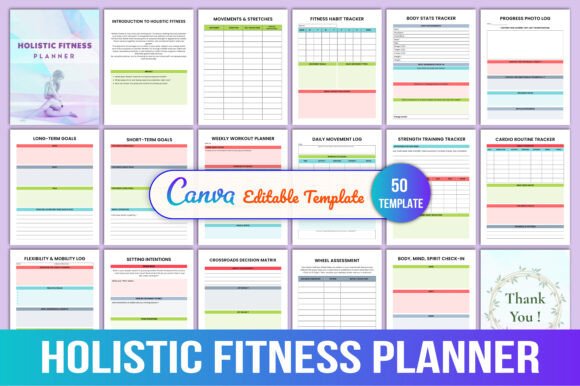
Holistic Fitness Planner
Most fitness tools treat the body as a machine to optimize—track calories, count reps, hit macros, chase metrics. The Holistic Fitness Planner takes a different stance: it treats your well-being as an integrated system where movement, mindset, rest, and meaning co-evolve. For professionals who manage complex schedules, high-stakes decisions, and shifting priorities—entrepreneurs, educators, creators, marketers, freelancers—the value isn’t in more data, but in better coherence. This planner supports that coherence deliberately.
Why Integration Matters More Than Isolation
When you separate fitness from sleep, nutrition from stress response, or goals from emotional energy, you create friction. You might log every workout yet feel drained by midweek. You may meal-prep flawlessly but skip hydration when deadlines mount. You can meditate daily—and still react impulsively in meetings. The Holistic Fitness Planner resists fragmentation by design. Its weekly layout doesn’t isolate “fitness” in one column and “mindfulness” in another. Instead, it prompts reflection on how yesterday’s rest affected today’s focus—or how a rushed breakfast shaped your afternoon patience. That linkage is where sustainable change begins.
Strategic Use for High-Output Professionals
For decision-makers whose time is non-renewable, the Holistic Fitness Planner functions as both compass and filter. Consider this: if you’re launching a course, managing client deliverables, or leading a team through transition, your capacity isn’t just about hours—it’s about cognitive resilience, emotional regulation, and physical stamina. Using the planner intentionally means:
- Aligning habits with role demands: A founder tracking “energy dips” alongside meeting load may notice fatigue spikes after back-to-back Zoom calls—and proactively schedule breathwork or walking meetings instead of defaulting to caffeine.
- Preventing misalignment between goals and recovery: An educator planning curriculum while also training for a half-marathon might use the rest recovery logs to spot declining sleep quality before burnout sets in—not after.
- Calibrating self-care against real-world constraints: A freelance designer using the gratitude and mood tracker over six weeks may realize their creative flow peaks after morning journaling—not after scrolling social media. That insight informs scheduling, not just motivation.
This isn’t about adding more to your plate. It’s about making existing effort more effective by revealing hidden dependencies—like how hydration impacts email response clarity, or how evening screen time delays deep sleep needed for strategic thinking the next day.
How to Approach the Holistic Fitness Planner Intentionally
Like any tool, the Holistic Fitness Planner delivers diminishing returns without deliberate framing. Randomly filling in boxes won’t shift outcomes. But anchoring its use to three strategic questions transforms it from journal to lever:
- What outcome am I protecting—or enabling—by investing time here? (e.g., “I’m using the mindfulness log to sustain calm during investor negotiations.”)
- Which dimension of wellness most frequently undermines my current priority? (e.g., “My nutrition logging shows I skip lunch when editing—so I’ll prep portable meals ahead of deadline weeks.”)
- Where do I need visibility—not just activity? (e.g., “I don’t need more workouts—I need to see how my strength training correlates with fewer afternoon headaches.”)
This approach turns the planner into a diagnostic instrument. The progress photo logs aren’t vanity metrics—they’re visual anchors for noticing postural shifts that ease neck strain during long writing sessions. The emotional eating patterns aren’t judgmental data points—they reveal triggers tied to specific project phases, allowing proactive boundary-setting.
When to Use It (and When Not To)
The Holistic Fitness Planner shines during periods of transition, expansion, or recalibration: launching a business, returning from leave, shifting roles, managing chronic stress, or preparing for a major personal milestone. It’s less useful as a passive habit tracker and more powerful as a context-aware planning partner.
It’s not ideal when used without a clear anchor point—like tracking hydration while ignoring sleep debt, or logging meditation while skipping restorative movement. Without connecting dots across sections, you risk reinforcing siloed thinking. For example, celebrating a “perfect” week of meal prep while ignoring rising anxiety scores in the mood tracker may mask deeper imbalances. The planner surfaces those tensions—but only if you review cross-sections monthly, not just fill pages weekly.
Practical Planning Tips That Yield Real Leverage
Start small, but start connected. Don’t attempt all trackers at once. Instead:
- Pick one “keystone habit” tied to your top priority: If focus is critical this quarter, begin with the daily check-in + breathwork log + sleep tracker. Notice how consistency in those three areas affects your ability to enter deep work.
- Use the monthly reflection to audit alignment—not achievement: Ask, “Did my energy investments match my stated priorities?” Not “Did I hit all my goals?” The former reveals strategy gaps; the latter reinforces hustle culture.
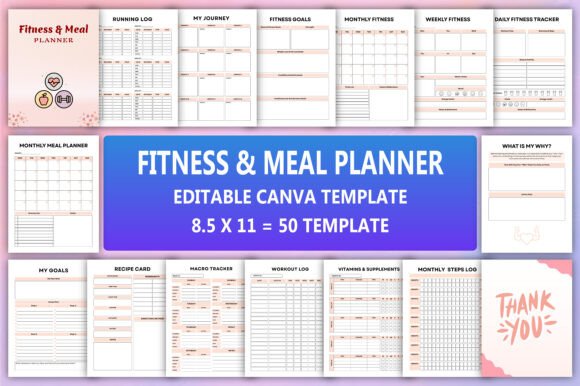
- Leverage the editable Canva link for role-specific customization: A blogger might add a “content creation energy” field beside the mood tracker. A small business owner could embed quarterly KPIs next to goal-setting pages. This isn’t decoration—it’s operational integration.
- Let the grocery list serve decision-making, not just logistics: Reviewing what you consistently omit (e.g., leafy greens, healthy fats) often points to deeper barriers—like lack of prep time, not preference. That insight guides system changes, not willpower fixes.
Risks of Using the Holistic Fitness Planner Without Context
Without grounding in personal context, even a thoughtful tool can reinforce unhelpful patterns. Common pitfalls include:
- Over-indexing on visible inputs: Logging every sip of water while ignoring why you’re chronically dehydrated (e.g., skipping breaks due to unrealistic deadlines).
- Treating reflection as performance: Writing “grateful for health” without examining how your schedule actually supports—or erodes—that health.
- Mistaking completion for progress: Filling every tracker box while avoiding hard questions like, “Is this goal still mine—or inherited from someone else’s definition of success?”
The Holistic Fitness Planner doesn’t eliminate complexity. It makes complexity legible. That only helps if you’re willing to interpret—not just record.
Long-Term Value: Beyond the First 90 Days
After consistent use for three months, many users report shifts that extend far beyond fitness: sharper boundary-setting, clearer communication of needs, improved tolerance for ambiguity, and stronger intuition about when to push versus pause. These aren’t side effects—they’re outcomes of sustained attention to interdependence.
For creators building personal brands, that translates to authenticity rooted in lived practice—not curated aesthetics. For educators designing curricula, it cultivates embodied presence that students sense. For founders, it builds stamina grounded in rhythm, not adrenaline. The Holistic Fitness Planner supports that depth because it refuses to reduce wellness to checkboxes. It asks, quietly but persistently: What kind of life are you building—not just what kind of body are you shaping?
That question doesn’t yield quick answers. But with the right structure—and honest engagement—the Holistic Fitness Planner becomes more than a tool. It becomes a practice in showing up, whole, for the work that matters most.