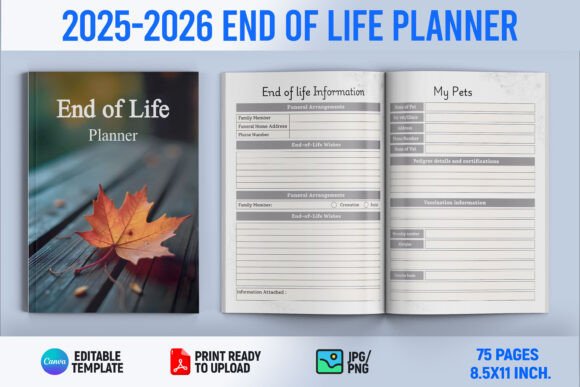
2025-2026 End of Life Planner: A Practical Tool for Content Creators
The 2025-2026 End of Life Planner is a specialized resource designed to assist content creators, particularly those using Kindle Direct Publishing (KDP), in managing the lifecycle of their digital products. This planner serves as a strategic tool that helps authors and publishers stay organized, anticipate changes, and plan for the future of their work. With the publishing landscape evolving rapidly, having a structured approach to managing content lifecycles is more important than ever.
For KDP authors, the 2025-2026 End of Life Planner offers a unique opportunity to maintain relevance and engagement with their audience. It allows creators to track the performance of their books, identify trends, and make informed decisions about when to update, repurpose, or retire content. This level of foresight can significantly enhance the long-term success of a publishing strategy.
Key Characteristics and Purpose
The 2025-2026 End of Life Planner is built with practicality in mind. Its primary purpose is to help users manage the end-of-life stages of their publications. This includes planning for updates, re-releases, and eventual retirement of content. The planner provides a clear framework for tracking key dates, performance metrics, and audience feedback.
One of the standout features of this planner is its adaptability. It is not a one-size-fits-all solution but rather a customizable template that can be tailored to fit various types of content and publishing strategies. Whether you're an independent author or a small business owner, the planner can be adjusted to meet your specific needs.
Strengths and Practical Value
The 2025-2026 End of Life Planner excels in several areas. First, it promotes proactive management of content lifecycles, which is essential for maintaining a strong presence in the competitive publishing market. By anticipating changes and planning accordingly, creators can avoid last-minute decisions that may impact their audience experience.
Second, the planner emphasizes data-driven decision-making. It encourages users to analyze performance metrics such as sales, downloads, and reader feedback. This analytical approach helps authors understand what works and what doesn’t, enabling them to refine their strategies over time.
Third, the planner supports long-term planning. It allows users to set goals for the future, whether it's updating content annually or retiring a book after a certain period. This forward-thinking perspective ensures that creators remain relevant and responsive to their audience’s needs.
Real-World Performance and Usability
In real-world use, the 2025-2026 End of Life Planner has proven to be a valuable asset for many content creators. For instance, an independent author who regularly releases new titles found that using the planner helped them keep track of each book's lifecycle more effectively. They were able to identify which titles were performing well and which ones needed updates or retirement.
Another user, a small business owner who publishes educational materials, reported that the planner allowed them to streamline their workflow. By setting clear timelines for updates and retirements, they reduced the risk of outdated content lingering on their platform. This not only improved the user experience but also enhanced the credibility of their brand.
However, it's important to note that the effectiveness of the planner depends on how consistently it is used. Like any tool, its value is maximized when integrated into a regular workflow. Users who commit to tracking their content's lifecycle are likely to see the most significant benefits.
Who Benefits Most?
The 2025-2026 End of Life Planner is particularly beneficial for content creators who produce a steady stream of material. This includes authors, educators, and small business owners who rely on consistent content delivery. It is also ideal for those who are looking to scale their publishing efforts and maintain a cohesive brand identity across multiple titles.
Additionally, the planner is useful for individuals who want to transition from traditional publishing to self-publishing. It provides a structured approach to managing the complexities of self-publishing, making it easier for newcomers to navigate the process.
For experienced publishers, the planner serves as a reminder of the importance of ongoing evaluation and adaptation. It encourages a mindset of continuous improvement, which is crucial in today's fast-paced digital environment.
Quality and Usability Considerations
The quality of the 2025-2026 End of Life Planner is evident in its design and functionality. It is built with attention to detail, ensuring that users have access to all the necessary tools and information. The template is easy to navigate, making it accessible even for those without extensive experience in content management.
Usability is another key strength of the planner. It is designed to be intuitive, allowing users to focus on their content rather than getting bogged down by technical details. The inclusion of clear instructions and examples further enhances its usability, making it a valuable resource for both beginners and seasoned professionals.
Despite its strengths, there are some limitations to consider. The planner is primarily focused on the end-of-life stage of content, which means it may not provide as much support for the initial creation or marketing phases. Creators who need assistance with these areas may need to seek additional resources.
Long-Term Value and Recommendations
The long-term value of the 2025-2026 End of Life Planner lies in its ability to support sustainable content management practices. By helping creators maintain a consistent and organized approach to their publishing activities, the planner contributes to the overall health and longevity of their brand.
For those considering adopting the planner, it's recommended to start by assessing their current content management practices. Identifying areas where the planner can add the most value will help ensure a smooth implementation. It's also advisable to allocate time for regular reviews and adjustments, as the publishing landscape continues to evolve.
In conclusion, the 2025-2026 End of Life Planner is a practical and effective tool for content creators looking to manage the lifecycle of their publications. Its strengths in organization, data-driven decision-making, and long-term planning make it a valuable addition to any publishing strategy. While it may not cover every aspect of content management, it provides a solid foundation for maintaining a cohesive and relevant presence in the digital publishing world.